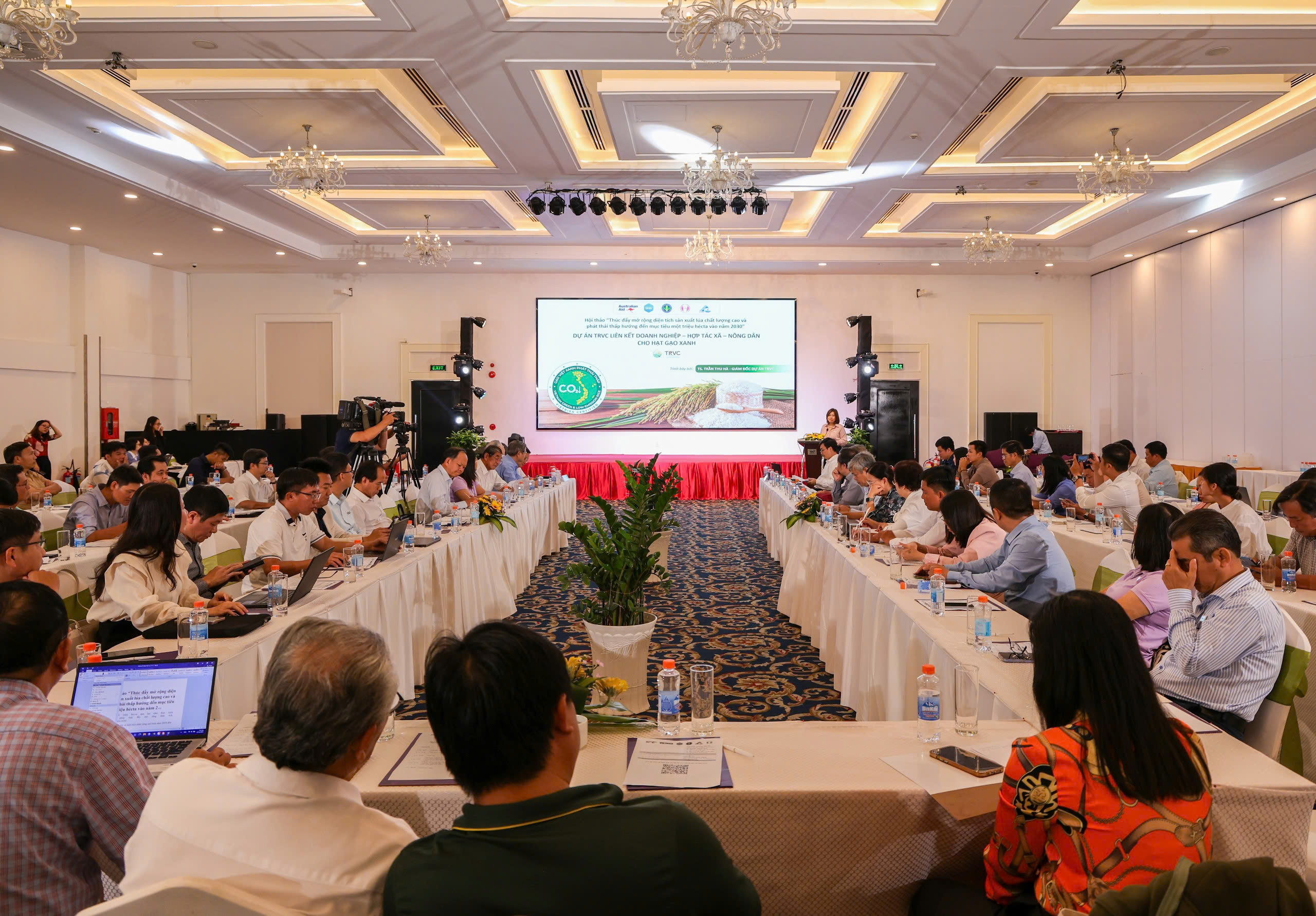
On 8 March 2026, in Can Tho City, the Ministry of Agriculture and Environment (MAE) convened the Two-year Review Conference of the Project on sustainable development of 01 million hectares for specialized farming of rice with high quality and low emission associated with green growth of the Mekong Delta by 2030 (the 1 Million Hectares Rice Program). At the conference, Ministry leadership acknowledged the initial results achieved in advancing the transition toward high-quality, low-emission rice production systems across the Mekong Delta.
Minister Tran Duc Thang and Deputy Minister Tran Thanh Nam highly appreciated the close accompaniment of international organizations and development partners in the implementation of the Program, including the Netherlands Development Organisation SNV through the Project “Transforming Rice Value Chains for Climate Resilience and Sustainable Development in the Mekong Delta (TRVC)”, funded by the Australian Government.
Minister Tran Duc Thang and Deputy Minister Tran Thanh Nam highly appreciated the close accompaniment of international organizations and development partners in the implementation of the Program, including the Netherlands Development Organisation SNV through the Project “Transforming Rice Value Chains for Climate Resilience and Sustainable Development in the Mekong Delta (TRVC)”, funded by the Australian Government.
“International organizations such as the World Bank, the International Rice Research Institute, and in particular the Netherlands Development Organisation SNV with the fund of Australian Government have made important contributions to supporting Vietnam in developing low-emission rice production models, strengthening value chain linkages, and promoting transformation solutions aligned with green growth orientation” said Deputy Minister Tran Thanh Nam at the conference
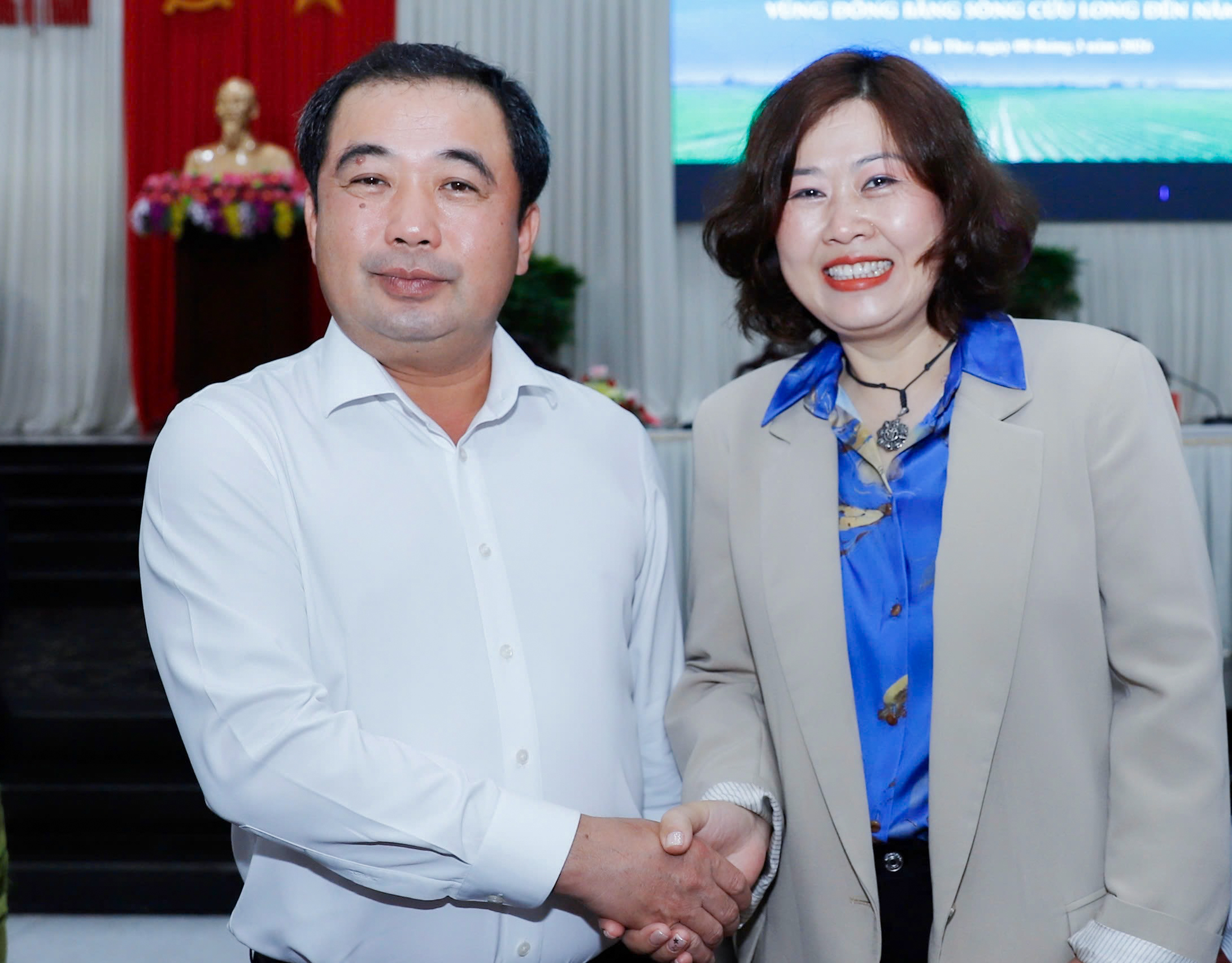 Figure 1. TRVC Team Leader, SNV, Ms. Tran Thu Ha reported to Minister of Agriculture and Environment Tran Duc Thang on the implementation status of the TRVC Project during the meeting session with international organizations held within the framework of the Conference.
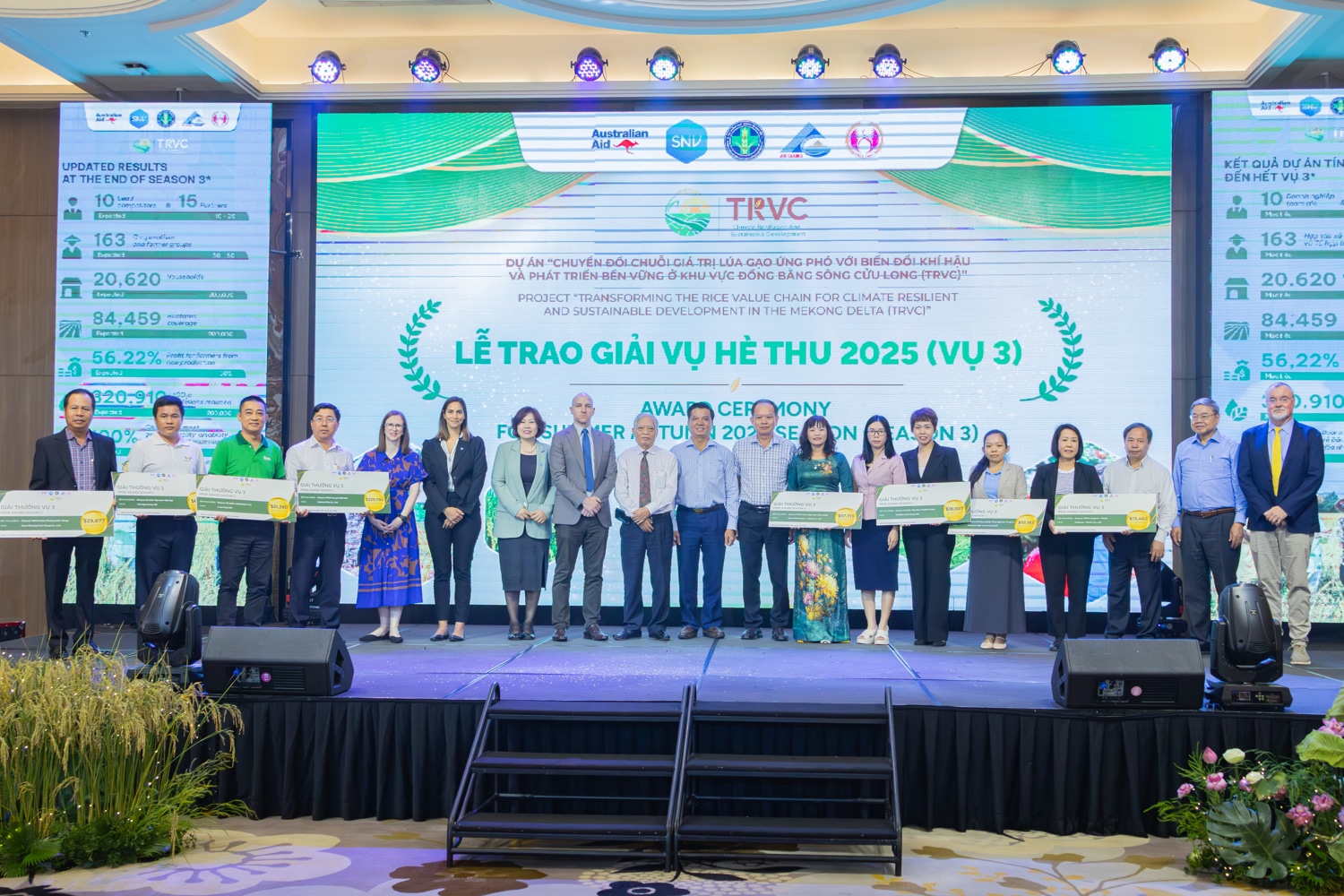
Specifically, the TRVC Project has not only met but significantly exceeded initial expectations, initially demonstrating the effectiveness and feasibility of a market-linked, high-quality, low-emission rice value chain model. Through close collaboration with 10 companies and more than 30,620 smallholder farming households across Dong Thap and An Giang provinces, by the end of Season 4, TRVC Project has scaled up the implementation of sustainable rice cultivation practices to 150,523 hectares, equivalent to 75% of the 200,000-hectare target, achieving progress ahead of schedule.
Notably, initial results (as of the reporting period for Season 3 – SummerAutumn 2025) indicate outstanding performance in both economic and environmental dimensions:
- The average profit of farming households increased by approximately 57% after three cropping seasons, demonstrating a clear impact on livelihoods;
- Emission reductions reached 304,125 tCO₂e, exceeding the 200,000-ton target by 52%, affirming a tangible contribution to national emission reduction goals.
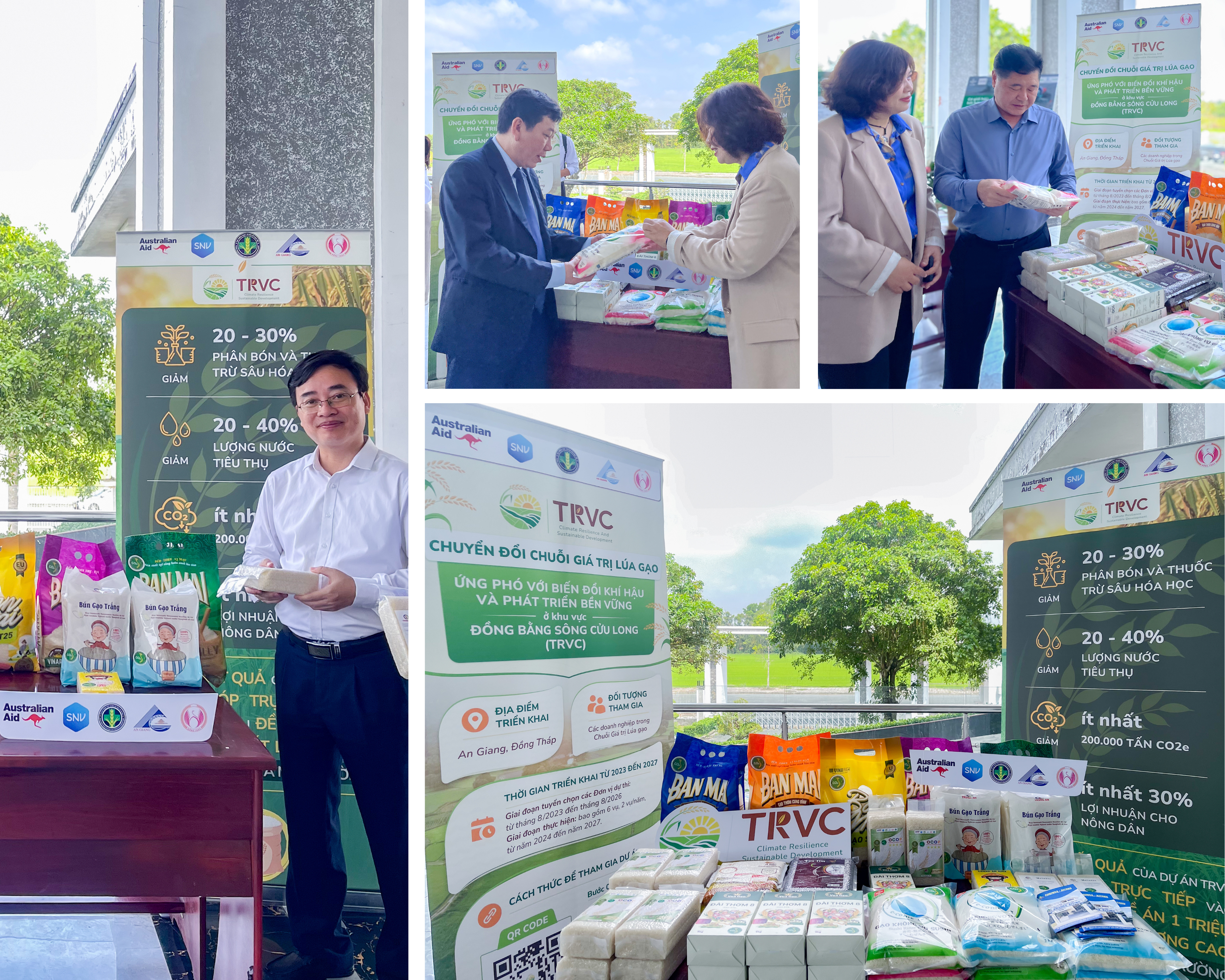
Figure 2. The exhibition booth showcasing “Vietnam Green – Low Emission Rice” products by enterprises participating in the TRVC Project attracted the attention and visit of leaders from MAE. From left to right: Deputy Director General of the Department of Plant Production and Protection – Nguyen Quoc Manh; Director General of the International Cooperation Department – Nguyen Do Anh Tuan; and Director of the National Agricultural Extension Center – Le Quoc Thanh.
These results demonstrate that the TRVC Project is not only “on the right track” but also “moving faster and going further than expected,” reinforcing its pioneering role and laying a strong foundation for advancing the transition toward a low-emission, traceable rice value chain that meets the requirements of premium rice markets and international sustainability standards.
Top