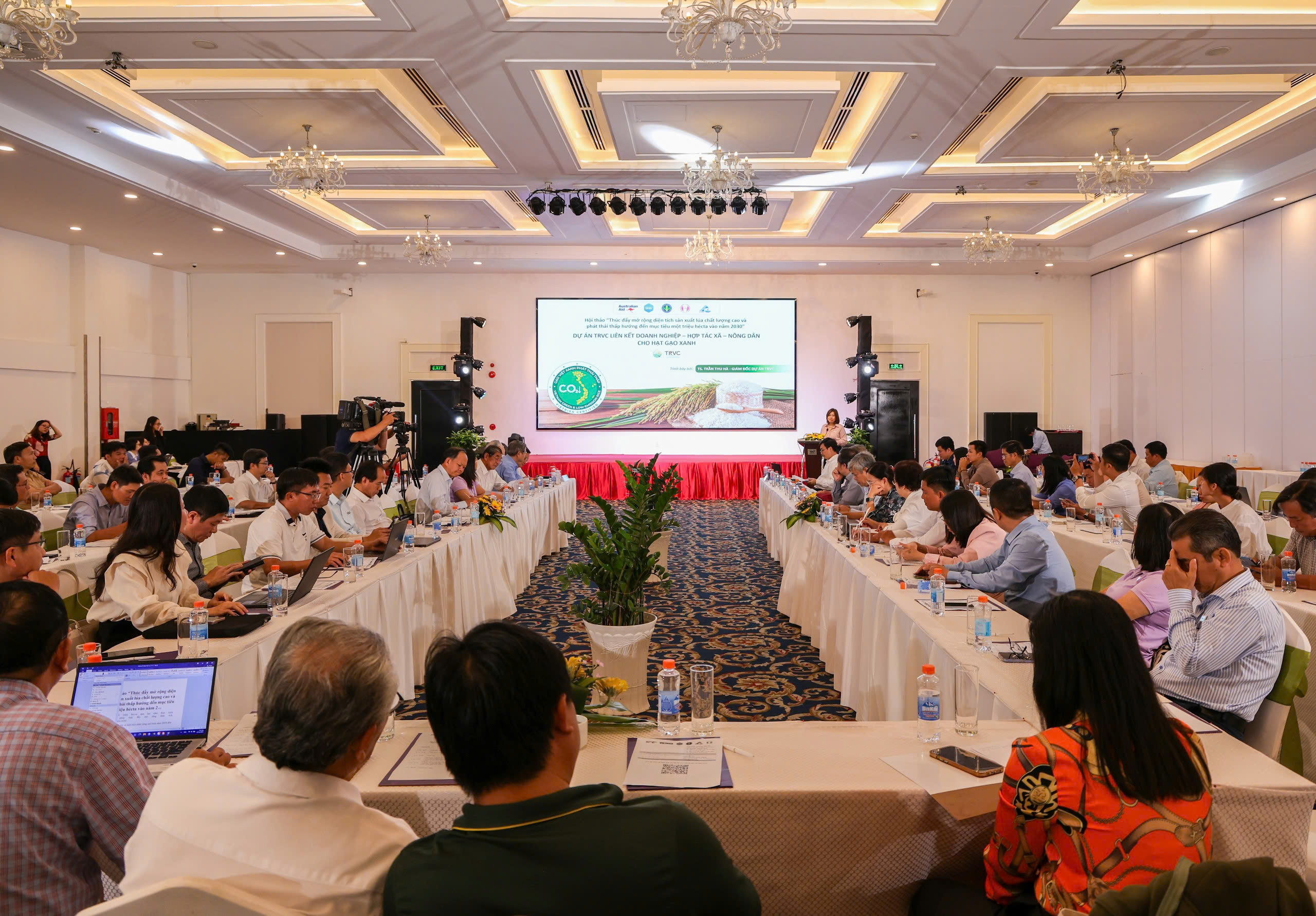
On 31 December 2025, in Can Tho City, the Vietnam Rice Sector Association (VIETRISA) convened the “VIETRISA 2026 Engagement Forum” under the theme “One million hectares – a shared journey”.
The forum was attended by Mr. Le Minh Hoan, Vice Chairperson of the National Assembly; Mr. Cao Duc Phat, former Minister of Agriculture and Environment; leaders of provinces and cities in the Mekong Delta; and representatives from organizations, research institutes, scientific communities, rice companies, agricultural machinery and fertilizer companies involved in the implementation of the national program, as well as outstanding farmers.

Representing SNV Netherlands Development Organisation, Ms. Tran Thu Ha, Team Leader of the “Transforming Rice Value Chains for Climate-Resilient and Sustainable Development in the Mekong Delta” (TRVC) project, participated as a panel speaker. Ms. Thu Ha shared innovative approaches developed under the TRVC Projectto promote private sector engagement across the rice value chain, thereby fostering value chain linkages within a sustainable rice ecosystem.
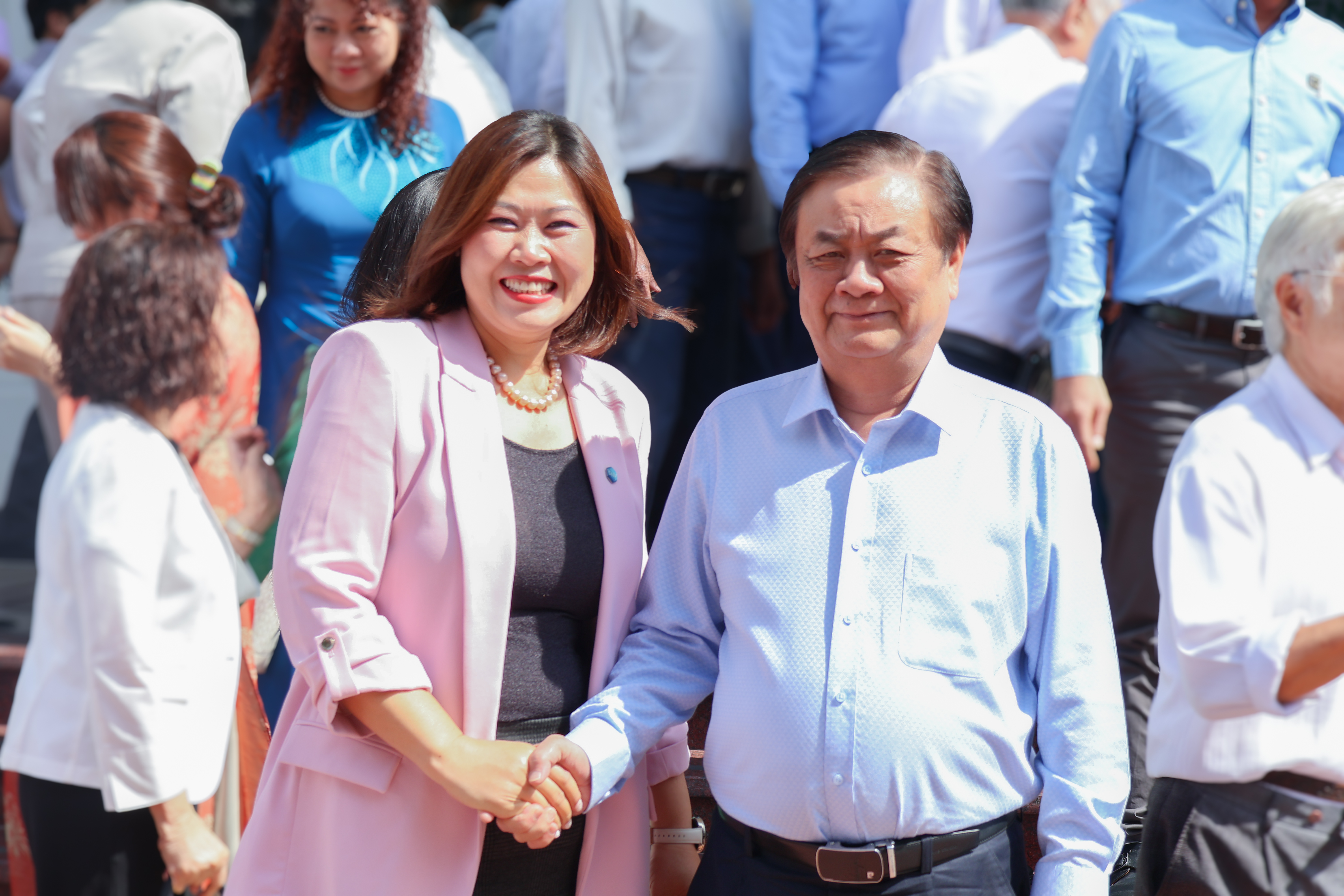
Looking back on the journey toward high-quality, low-emission rice production
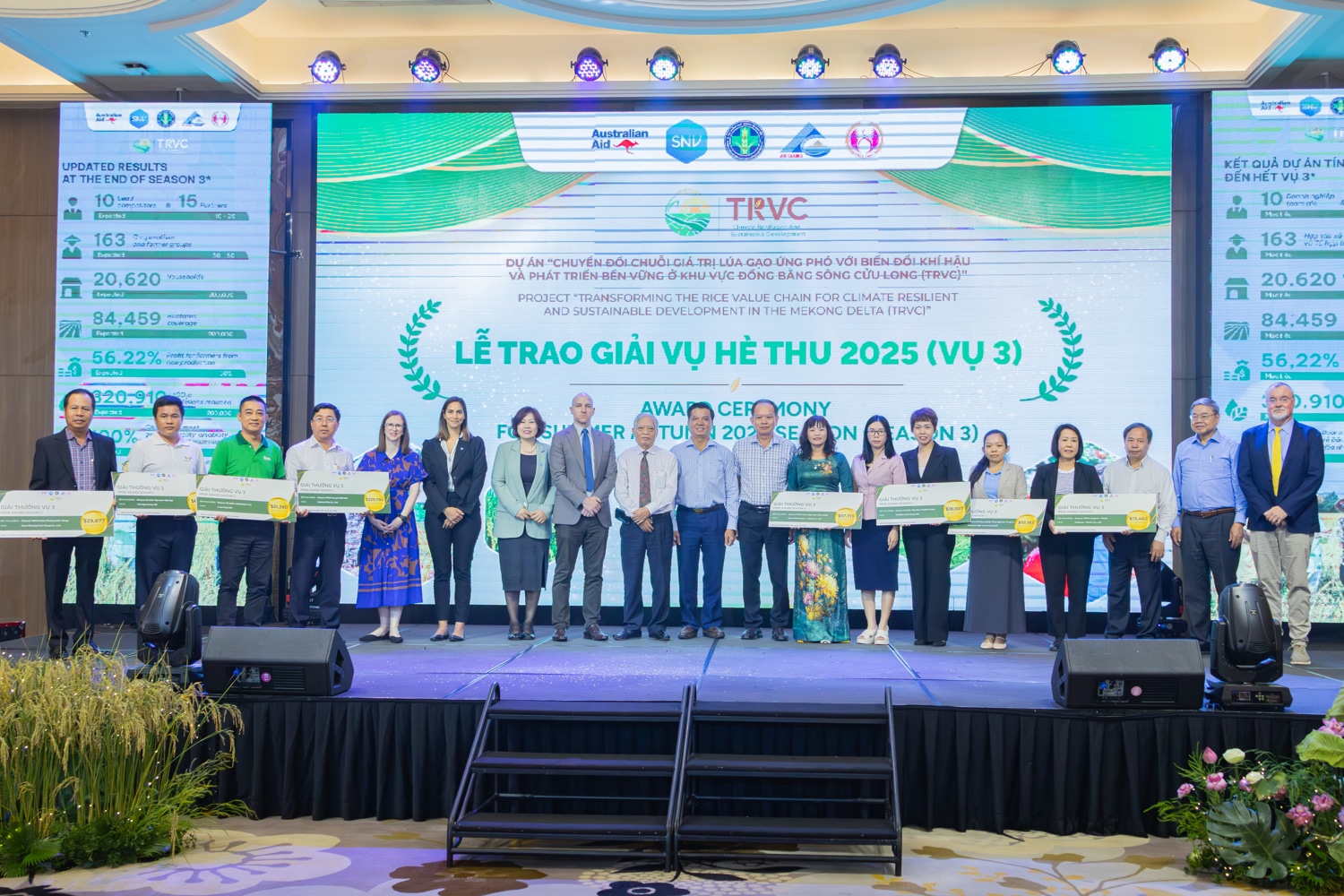
In 2025, VIETRISA made significant contributions to the program, including the issuance of regulations on the use of the “Vietnam Green Low-emission Rice” trademark. Based on independent verification results, VIETRISA granted certificates of the right to use the “Vietnam Green Low-emission Rice” trademark to eight companies, covering a total output of 71,420 tons of rice cultivated across 18,048 hectares.
The role of the TRVC Projectin strengthening rice value chain linkages
Within this process, the TRVC project, funded by the Australian Government and implemented by SNV Netherlands Development Organisation in coordination with the Departments of Agriculture and Environment of An Giang and Dong Thap provinces, has been recognized as a core component of The 1 Million Hectares Rice Program.At the forum, Dr. Tran Thu Ha, TRVC Team Leader, affirmed that TRVC was designed as a core model of the 1 million hectares high-quality, low-emission rice program, closely aligned with national policy orientations on green growth and the implementation of ESG principles. The Project applies a pay-for-results mechanism, with a focus on translating policy objectives into measurable outcomes across the entire rice value chain.
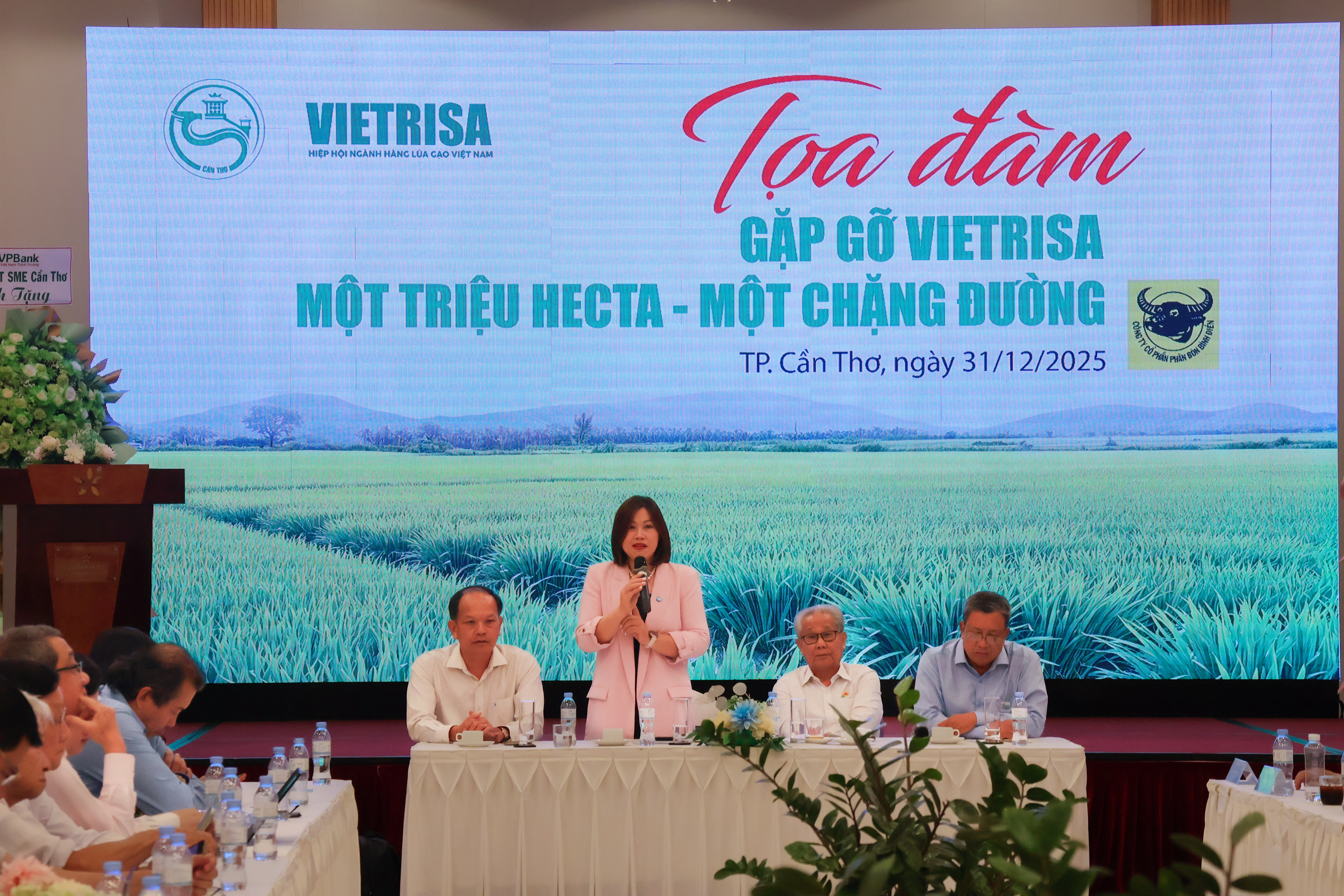 Dr. Tran Thu Ha, TRVC Team Leader, SNV Vietnam shares insights on the contribution of the TRVC Project to The 1 Million Hectares Rice Program.
The TRVC Project applies a catalytic approach that combines results-based cash incentives verified through independent assessment, opportunities to develop low-emission green rice market segments, enhanced corporate branding, and support for companies in meeting ESG commitments and accessing sustainable development opportunities, including carbon credits. Under this approach, participating companies are empowered to proactively establish value chain and production linkages with smallholder farmers and cooperatives to scale up sustainable rice production practices. This generates three core benefits:
- Economic outcome: participating farmers achieving profit margin increases of at least 30%;
- Environmental performance: measurable and verified greenhouse gas emission reductions;
- Social impact: ensuring gender equality and disability inclusion within companies and linked communities.
A key contribution of TRVC is the application of an internationally aligned measurement, reporting, and verification (MRV) system, implemented in partnership with an independent verifier and supported by advanced technologies such as satellite imagery and artificial intelligence. These verified results provide the basis for VIETRISA to award the “Vietnam Green Low-emission Rice” trademark, enabling companies to demonstrate ESG compliance, access green finance, and enter high-standard sustainable markets.
The role of pioneering companies in driving the green transition
Speaking at the event, Ms. Nguyen Thi Tra My, Chairwoman of the Vietnam Seed Corporation (Vinaseed – PAN Group), noted that the TRVC Project has acted as a “catalyst,” enabling companies to translate long-standing commitments to sustainable development into concrete actions that can be scaled up“Previously, when the Prime Minister asked me about the feasibility of The 1 Million Hectares Rice Program, I answered very frankly that it was extremely challenging, difficult, but perhaps achievable. Later, when the TRVC Project was introduced, I was truly moved to tears. Today, seeing eight companies participating, with production scales ranging from 600 to more than 6,000 hectares, is deeply emotional for me. For PAN Group, this represents a journey of more than ten years pursuing sustainable development; for me personally, it has been 15 to 20 years of persistence. It is truly an overwhelming moment to witness that, in just two years, a Project implemented by a very modest organization, with limited human resources, has been able to generate such significant change. I do not believe we are courageous warriors; rather, it is because we have had the TRVC Project as a catalyst, one that has strongly supported us in achieving success and becoming a leading enterprise in the green growth journey.”
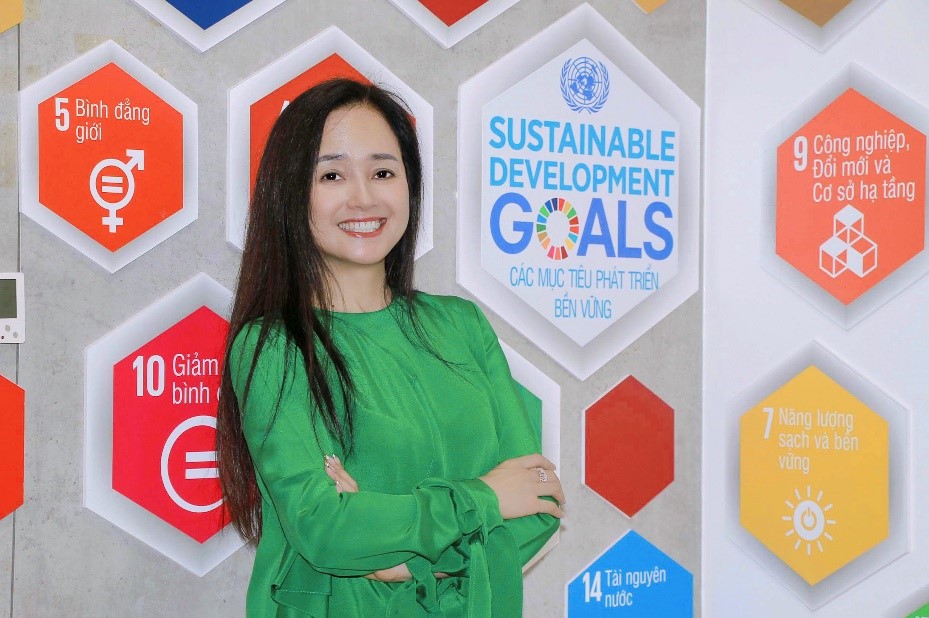
Ms. Nguyen Thi Tra My, Chairwoman of Vinaseed – PAN Group, one of the pioneering companies accompanying The 1 Million Hectares Rice Program and the TRVC Project in advancing green growth.
According to Ms. Tra My, the initial successes achieved by companies participating in the TRVC Project demonstrate that the green transition is not merely a technical challenge, but also a process that requires trust-building, long-term commitment, and close collaboration among the public sector, the private sector, and development organizations.
Direction for 2026: scaling up while maintaining quality
The presence of the TRVC Project at the event reaffirmed the commitment of SNV to accompany Vietnam’s rice sector. Contributions shared at the forum provided an important basis for stakeholders to optimize resources and address constraints related to technical infrastructure and value chain linkages, in support of achieving sustainable development objectives in 2026.
The event concluded with strong consensus on the need to continue advancing innovative initiatives, accelerating the green transition, and enhancing the global positioning of Vietnam’s rice brand in international markets
Top