Download or view PDF here (Google Drive Link)
Portrait of a woman leader
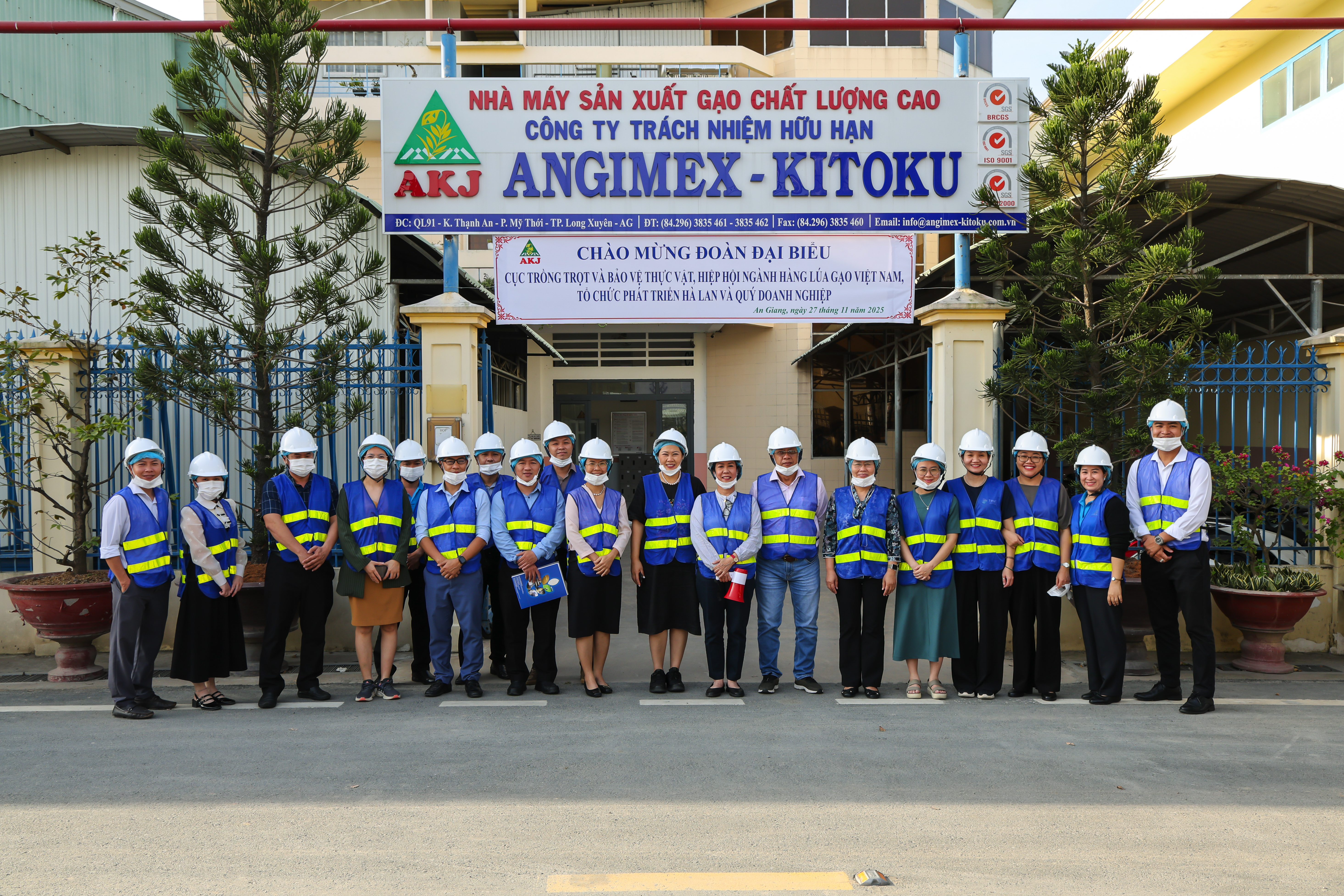
Angimex-Kitoku Co., Ltd. (AKJ), established in 1991, is a Japanese–Vietnamese joint venture operating in rice production and processing, with a raw material production area in An Giang Province. Having joined AKJ in 2011, Ms. Tran Ngoc Chau became the first Vietnamese national to take charge of Business & Marketing at the company and currently serves as the company’s Deputy Director. With her strategic management mindset, she has helped steer AKJ towards developing the high-quality rice segment, enabling the company to meet international standards for quality, food safety and sustainable development, while expanding exports to multiple premium markets.However, in 2023, the company’s understanding of and approach to sustainable and inclusive development remained limited. Through workshops and direct working sessions with the TRVC Project leadership, businesses, including AKJ, gained a clearer understanding of a systematic approach to these areas by participating in activities that integrated gender equality and disability inclusion into their business models. Although AKJ’s parent company was not yet fully convinced that AKJ Vietnam had the capacity to meet the TRVC Project’s dual criteria, Ms. Chau confidently proposed that AKJ participate in the Project. This laid the groundwork for sustainable and inclusive production and business linkages, supported by the TRVC Project’s guidance, capacity building and internationally verified results.
Ms. Tran Ngoc Chau’s presence in a senior leadership position in Vietnam affirms that women can fully assume pivotal roles in a business environment still strongly influenced by traditional culture. However, the success of a woman leader does not mean that women’s roles and voices are fully recognised throughout the entire value chain.
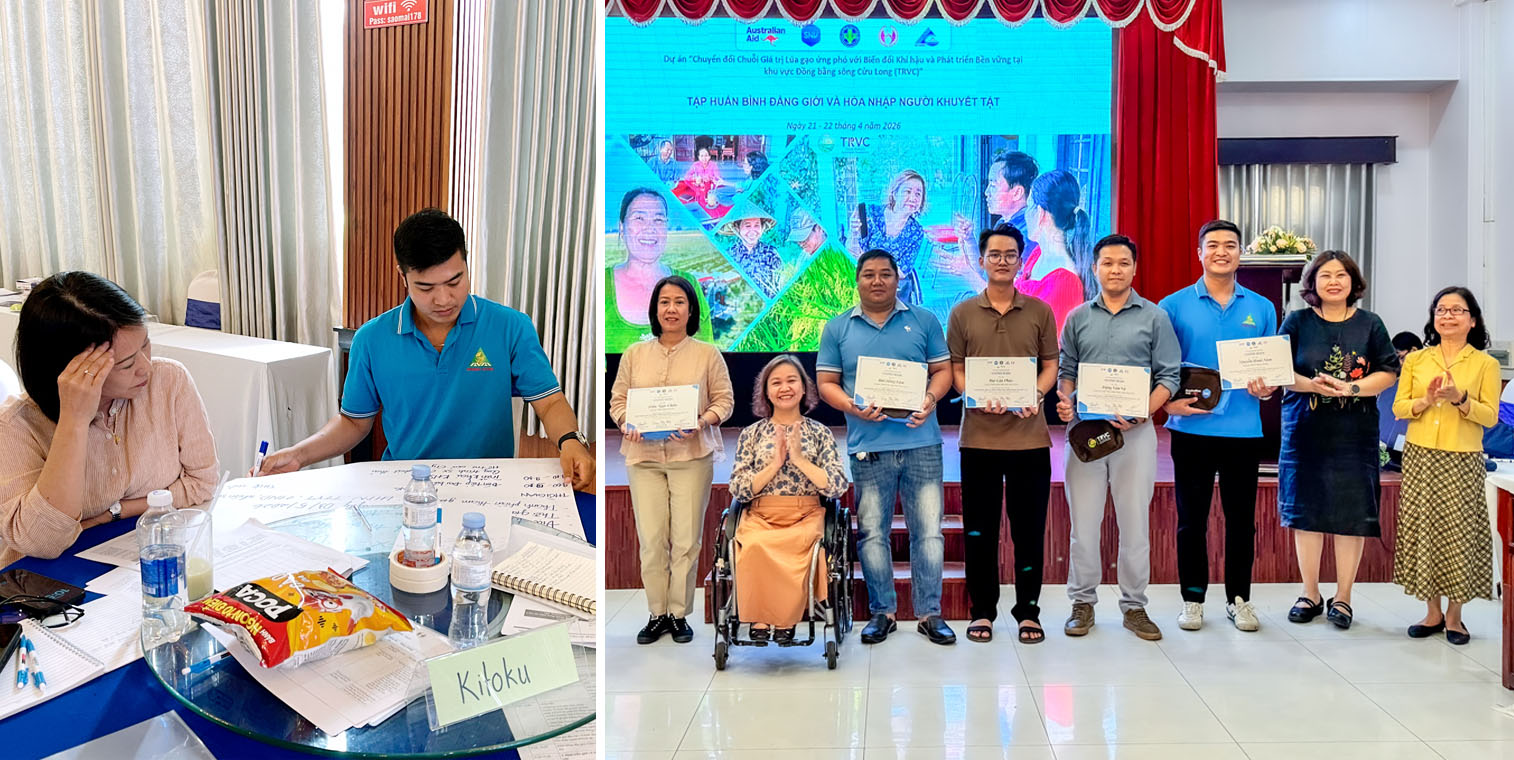 Ms. Châu and staff participating in GEDSI training
Towards a green, inclusive and gender-equitable rice sector
Pursuing a vision of green and sustainable development, Ms. Chau has always been concerned with how to increase the value of rice and help AKJ stay ahead of emerging market trends. When participating in the Transforming the Rice Value Chain for Climate Resilient and Sustainable Development in the Mekong Delta (TRVC) Project, she attended training courses on Gender Equality, Disability and Social Inclusion (GEDSI). This was when she began to recognise another dimension of sustainable development: women’s participation and roles in the rice value chain.“Before joining the Project, the company had not paid attention to gender equality. It did not matter who signed the contract, whether a man or a woman. The Project opened up the company’s understanding of the benefits to businesses when women and persons with disabilities participate. Today, the company’s employees and managers understand this clearly and actively participate in training courses, including ESG training organised by the Project.” Ms Chau shared.
Looking back at AKJ’s raw material growing area, she realised that although women played an important role in household decision-making, they had fewer opportunities to be named on contracts, transact with businesses or participate in technical training. These limitations not only inadvertently narrowed women’s opportunities for development but also reduced their access to new knowledge, affecting the effectiveness of the transition towards a sustainable value chain. In the first cropping season of participation in the Project, women accounted for only 11.6% of household representatives named on rice off-take contracts with the company, meaning their role as decision-makers was not adequately reflected.
Recognising these barriers, she continued to ask questions: How could women participate more? What policies would be appropriate? With an open and eager-to-learn mindset, she was among the few leaders who attended the full series of GEDSI training courses organised by the Project, proactively seeking to identify approaches suited to the company’s actual circumstances.
From learning to leading change
Building on her new understanding, Ms. Chau directly led AKJ to translate the TRVC Project’s GEDSI guidelines and criteria into concrete actions in the company’s operations. For the first time, AKJ developed and introduced preferential policies for women and persons with disabilities, ranging from support for telephone charges and travel expenses for attending training to higher rice purchasing prices for contracts represented by women. The company proactively encouraged farming households to create opportunities for women to be named on production linkage contracts.Going beyond office-level management, Ms. Chau also initiated and directly participated in a series of communication activities aimed at removing gender barriers in the community. She spent time visiting rice fields and speaking directly with farmers to introduce the company’s policies while spreading the message of equality and mutual respect in agricultural production.
Thanks to these pioneering policies and her decisive action, the proportion of women representing households in signing linkage contracts at AKJ rose sharply from 11.6% in the first season to 35% in the second season, making AKJ one of the leading enterprises in gender equality performance among the 10 businesses participating in the TRVC Project.
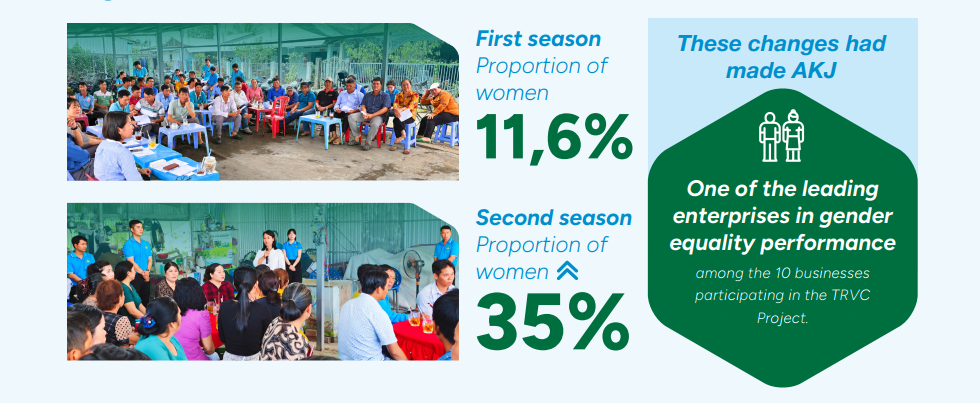 Proportion of women representing households in signing linkage contracts at AKJ rose sharply
Tangible value across the entire value chain
The increase in the proportion of women representing households in signing contracts is more than just an achievement recorded in figures; it has also brought profound changes at multiple levels. In practice, decisions to adopt more sustainable rice cultivation practices, such as alternate wetting and drying, reducing seed use, balanced fertilisation, and collecting and treating rice straw, require fundamental changes in habits and strict compliance from households. If such decisions rely solely on men’s agreement, conflicts or a lack of coordination during field implementation may easily arise. When women are given access to information and technical knowledge and are involved in decision-making, this shared commitment helps ensure that emission-reduction practices are followed and more widely adopted.Speaking about the changes among farmers, Ms. Chau proudly shared:
“In the past, women did not know how to sign rice purchasing contracts and did not clearly understand the different new rice varieties. Now, they have an important voice in their families and understand cultivation practices. They choose Japanese rice varieties to grow because there is a purchasing commitment, so they do not have to face uncertainty. The company’s direct signing of contracts with farming households also creates opportunities for us to engage with them more closely, especially women, from changing their awareness to putting that awareness into practical action.”
From the business perspective, under Ms. Chau’s leadership in participating in the TRVC Project, AKJ has achieved independently verified sustainable development results. This has provided an important foundation for AKJ to pass a rigorous assessment process and secure Vietnam’s first sustainability-linked loan in the agriculture sector from MUFG Bank, creating additional resources for the company to expand its scale and extend the impact of its model.
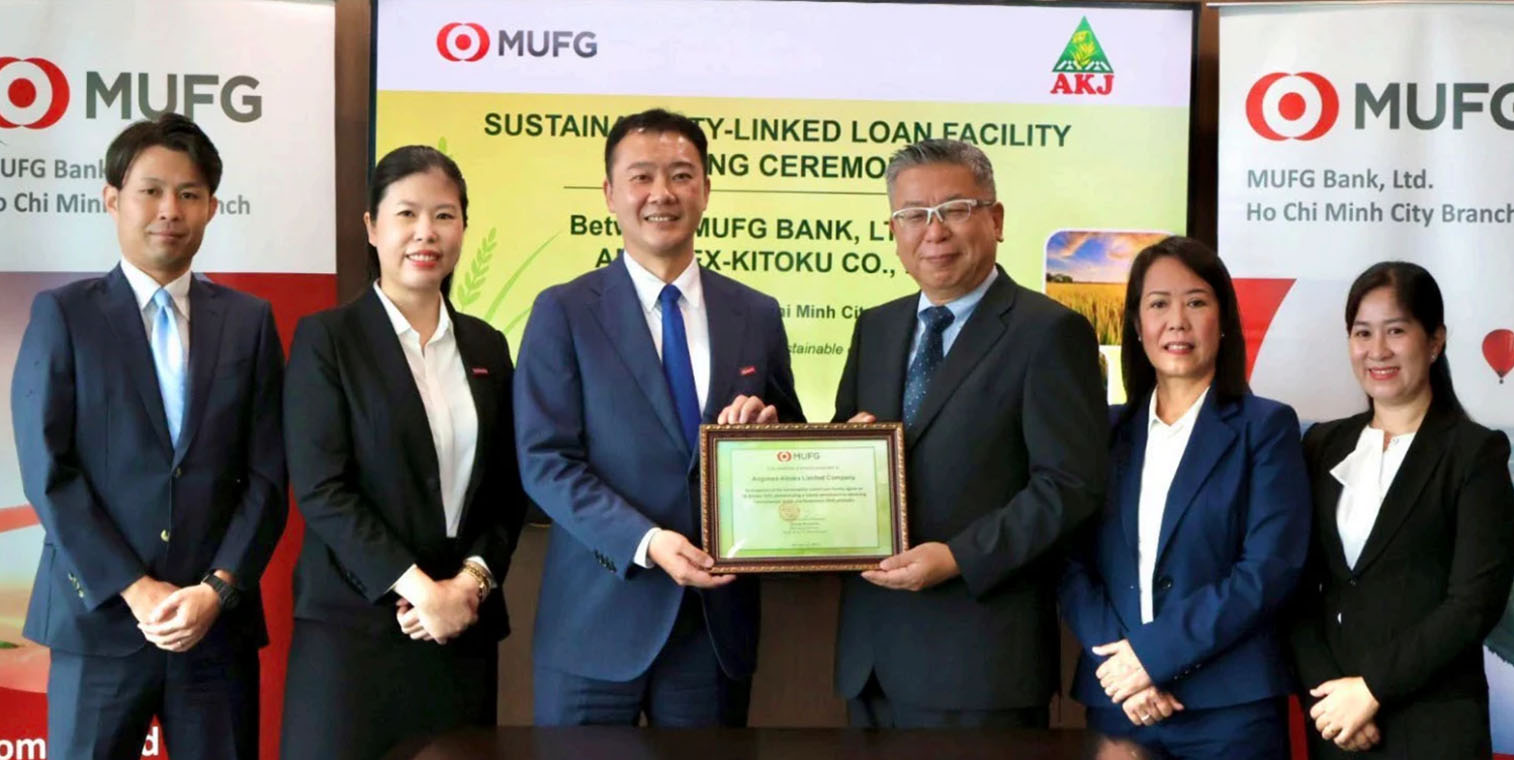
Angimex-Kitoku signs a sustainability-linked loan agreement with MUFG Bank
The ripple effect of an inclusive development model
The success of Ms. Tran Ngoc Chau and AKJ has received positive recognition from the management of the parent company in Japan. She was invited to Japan and the United Kingdom to share lessons with international partners on integrating sustainability and gender equality criteria into agricultural value chains. This recognition demonstrates that when women leaders are given the opportunity to realise their potential, traditional barriers and prejudices can all be overcome.The journey of Ms. Tran Ngoc Chau and AKJ demonstrates the TRVC Project’s role in supporting, connecting and creating enabling conditions for businesses as they promote sustainable development practices and GEDSI. By unlocking economic incentives and providing practical tools, the Project has acted as a catalyst, enabling businesses to make GEDSI objectives part of their own internal development needs. When gender equality and social inclusion deliver tangible benefits to both farmers and businesses, the agricultural ecosystem can continue to operate and spread these practices, contributing to an inclusive and sustainable rice value chain even after the Project comes to an end.
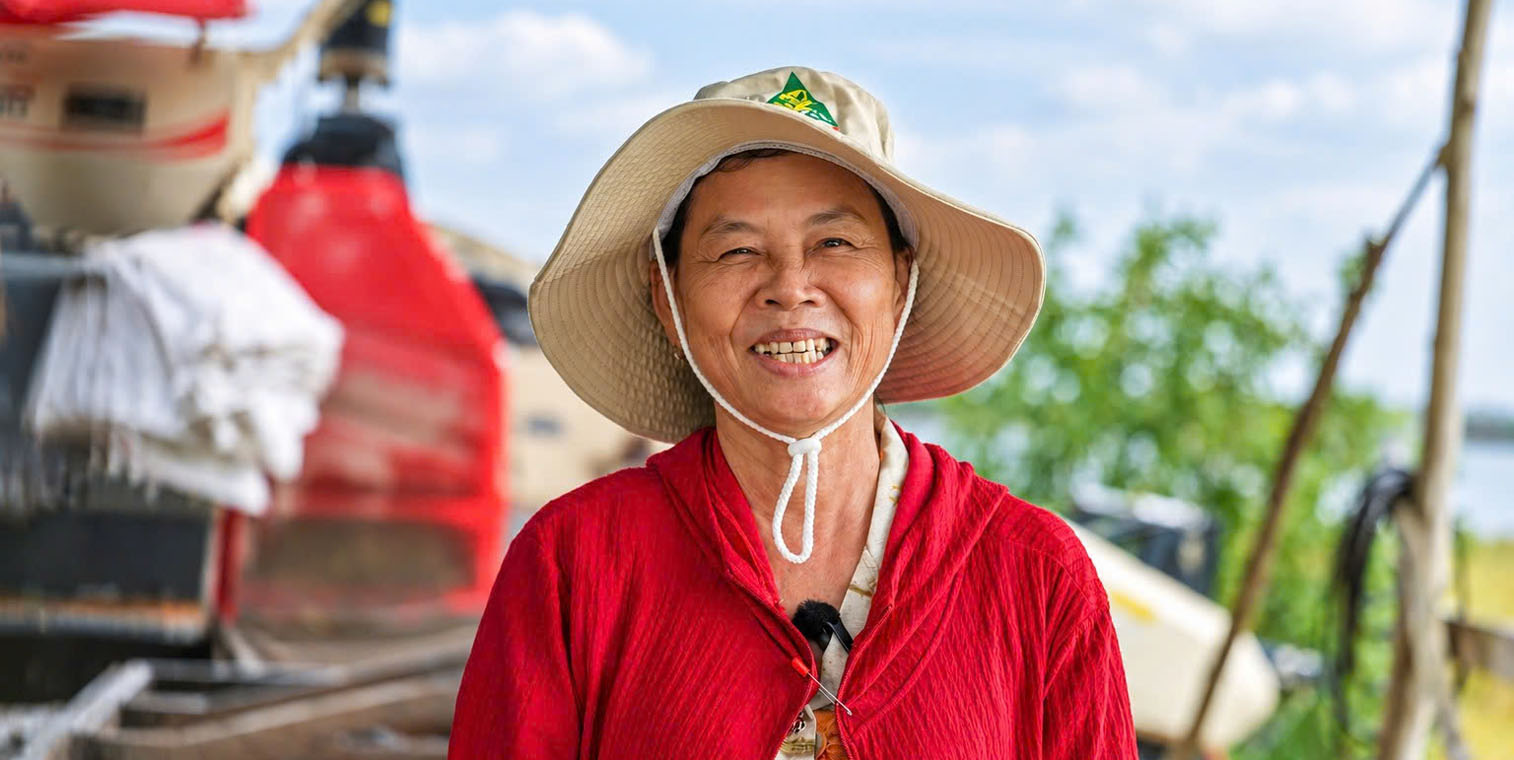 The bright smile of a female farmer partnering with Angimex Kitoku
The TRVC project’s distinctive approach to GEDSI implementation
Rather than providing direct funding for intervention activities in project areas, TRVC Project creates a distinctive approach by shifting from a “push” mechanism to a “pull” mechanism, placing businesses at the centre of driving change across the rice value chain.Through a Pay-for-Results mechanism, in each cropping season, TRVC Project incorporates GEDSI indicators as prerequisites for award consideration, alongside commitments to reduce emissions and improve farming household livelihoods.
To meet these criteria, businesses must fulfil a comprehensive set of gender equality criteria, covering both technical practices and management.
The Project also serves as a connector between businesses, the Women’s Union and local Departments of Health to implement communication activities that challenge gender stereotypes, thereby strengthening the sustainable capacity of all stakeholders.
In addition, TRVC Project experts accompany businesses and provide technical support throughout the implementation of GEDSI.
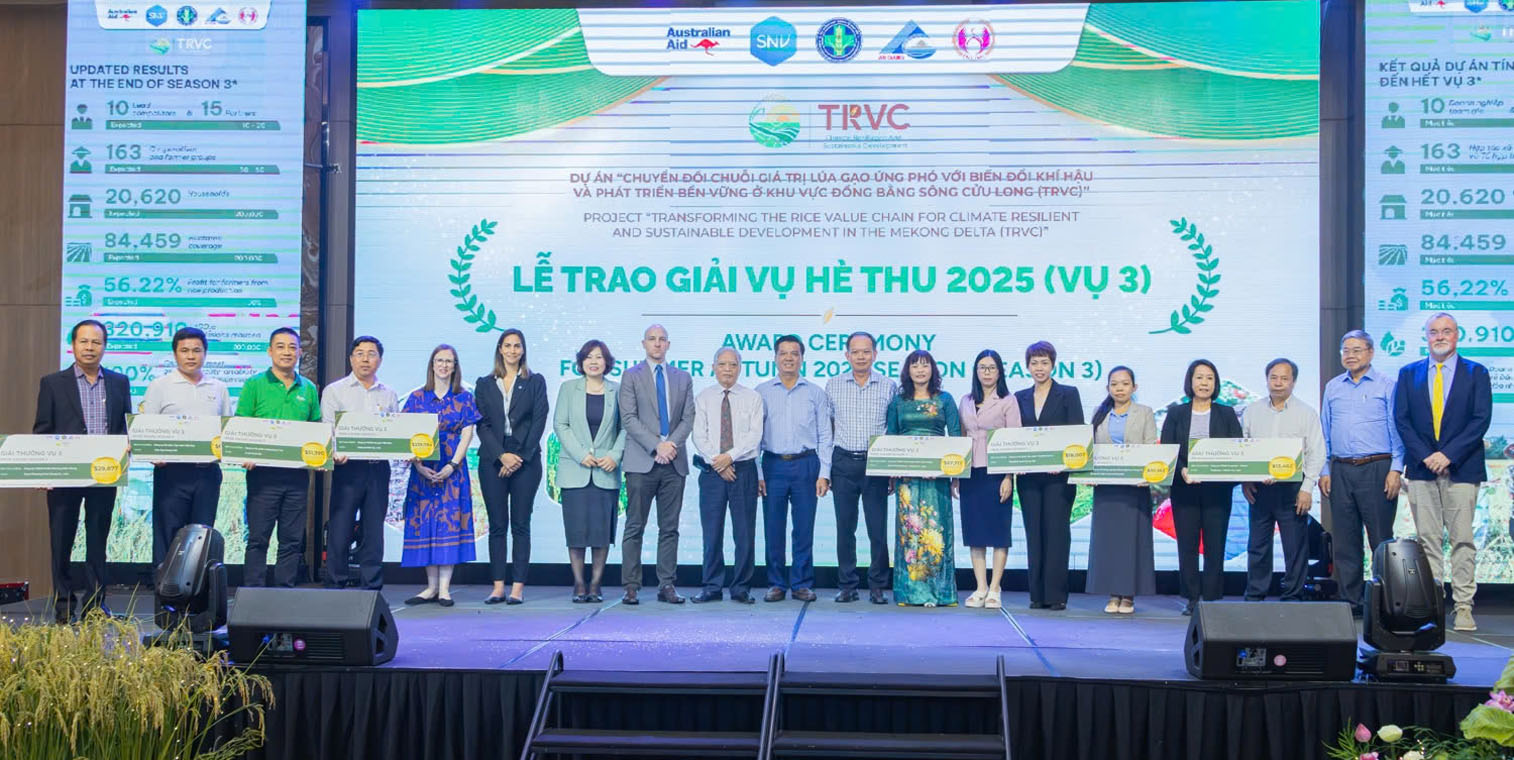
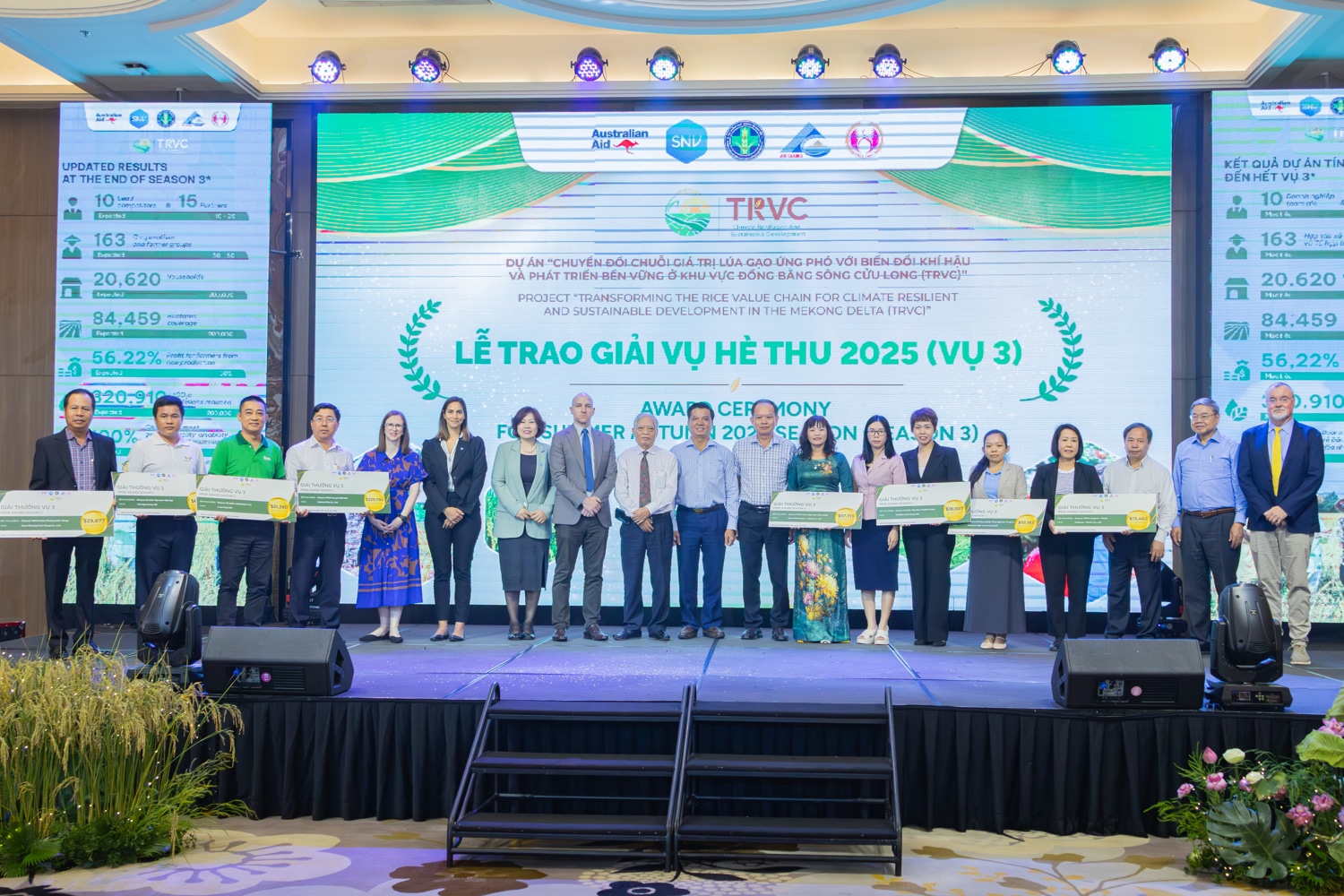
Representatives of participating businesses receiving Season 3 awards from the TRVC Project
Top